
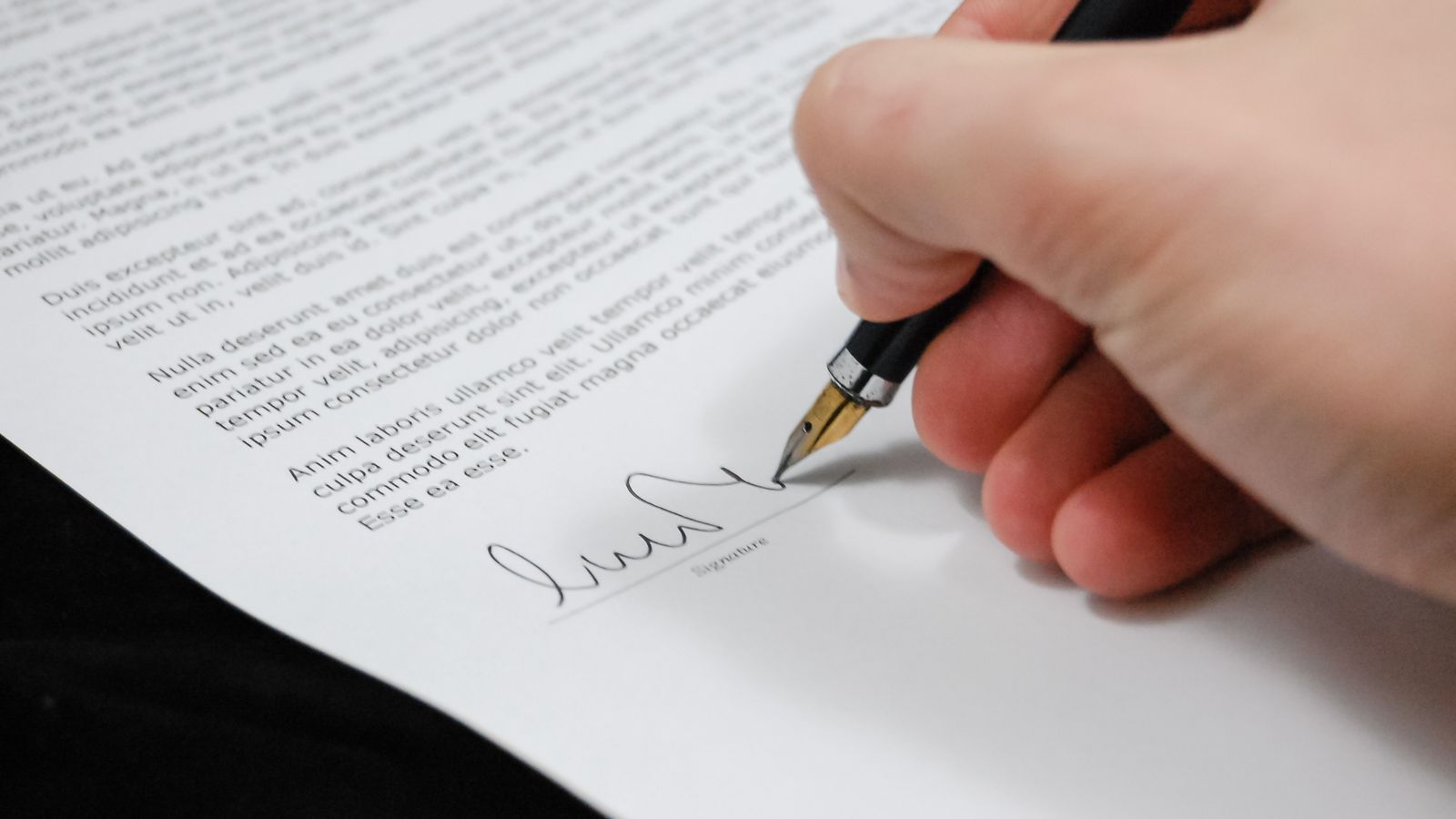
You’re holding a will. It looks official enough. Typed, signed, dated, two signatures at the bottom.
Whether a Texas court will admit it to probate comes down to a short list of requirements, and the list is probably shorter than you think. The bigger question is usually not whether the will is valid. It’s how much work and money it will take to prove it.
Those are different problems, and people conflate them constantly.
The Basic Requirements
Section 251.051 says a will must be:
- In writing
- Signed by the testator, or by someone else in the testator’s presence and at the testator’s direction
- Attested by two or more credible witnesses, at least 14 years old, who sign their own names in the testator’s presence
That’s it. No notary required for validity. No specific wording. No filing anywhere while the person is alive.
A will written on a legal pad with two neighbors watching the signing meets the statute. It will be a bigger headache to probate than one from a law office, but it is not invalid.
Note that the witnesses have to sign in the testator’s presence. Witnesses who sign in another room, or the next day, create a problem that’s hard to fix after the fact.
Handwritten Wills Are Real
Section 251.052 carves out an exception. A will written wholly in the testator’s handwriting doesn’t need witnesses at all.
That’s a holographic will, and Texas recognizes it.
The word doing the work is “wholly.” Entirely in their handwriting. A preprinted form with blanks filled in by hand is not a holographic will, because the printed parts aren’t in the testator’s handwriting. Those fill-in-the-blank will kits from the drugstore fail this test routinely, and they fail it in a way that surprises families.
A holographic will is valid. It is also harder to probate, because somebody has to prove the handwriting, and whoever can do that credibly may be hard to find years later.
Wills From Other States
Section 251.053 is useful and almost nobody knows it.
A written will doesn’t have to meet the Texas formalities if it complied with the law of the place where it was signed, or the law of where the testator was domiciled or had a residence, either when it was signed or when they died.
So your father’s Illinois will, signed in Illinois under Illinois rules, can be admitted in Texas. You don’t need it to look like a Texas will.
Self-Proved: the Part That Decides Your Cost
Here’s where validity and provability come apart.
A self-proved will, under Section 251.101, is one with a self-proving affidavit attached, subscribed and sworn by the testator and the witnesses. Or one made self-proved at signing under Section 251.1045.
Why it matters is Section 251.102(a). A self-proved will may be admitted to probate without the testimony of any subscribing witnesses.
No witnesses. No hunting anybody down. No hearing where somebody has to testify about a signing from 1998.
And 251.102(b) is worth reading too, because it closes a door people try to open. A self-proved will may not otherwise be treated differently from one that isn’t. The affidavit buys you a shortcut on proof. It doesn’t make the will stronger against a challenge on capacity or undue influence.
How to Tell if Yours Is Self-Proved
Look at the last page.
Past the testator’s signature and the witness signatures, there’s often a separate block of text, usually a paragraph or two, with the testator and both witnesses signing again, and a notary stamp and signature.
That second block is the self-proving affidavit. Two sets of signatures and a notary means self-proved.
One set of signatures and no notary means not self-proved, and your probate just got more complicated.
If It Isn’t Self-Proved
You’re not stuck. You’re just doing more work.
The court needs proof the will was properly executed. Usually that means testimony from one of the subscribing witnesses. If none are available, Texas allows other routes, including testimony from people who can identify the testator’s handwriting.
Section 251.103 also allows an attested will to be made self-proved after the fact, including after the original signing, as long as the requirements are met. That only helps while the testator is alive. Nobody can fix it after a death.
For a living person reading this with a will that isn’t self-proved: that’s a cheap fix now and an expensive one never.
What This Means for Your Probate
Walk through it in order.
Is it in writing and signed? Entirely handwritten, or witnessed by two people who signed in front of the testator? If yes, you probably have a valid will.
Is there a notarized affidavit block at the end? If yes, the proof part is easy and most of the simplified Texas procedures are open to you.
If no, the will may still be perfectly good. You just need a witness or handwriting proof, which costs time and usually money.
And if it’s a photocopy and nobody can find the original, that’s a different and harder case, because Texas presumes a will last known to be in the testator’s possession that can’t be found was revoked.
How We Handle It
Our flat-fee services, including muniment of title and testate administration, are built for wills that are original and self-proved. That’s what keeps the price predictable.
A handwritten will, a fill-in-the-blank form, a will that’s only a copy, or one without a self-proving affidavit, those we quote separately. Not because they can’t be probated, but because the work isn’t the same work.
The intake call is where we look at what you actually have. Send us the last page and we can usually tell you in a minute.
You can see current prices before deciding anything.
The Short Version
Valid and easy to probate are two different things. Texas is generous about validity and specific about proof. The notarized block at the end of the will is what separates a straightforward case from a slow one.
Not sure what you’ve got? Take the two-minute quiz or compare all five services.
This article is general information about Texas probate law, not legal advice, and reading it does not create an attorney-client relationship. Every estate is different, and the right process depends on facts specific to yours. Statutory references are to the Texas Estates Code as of the date of publication.
You’ve read how it works. Here’s what it costs.
Flat fees, set before you start. You answer questions, our system builds the court documents, and a Texas attorney reviews them, files them, and goes to the hearing with you.
- Price set before you start
- No consultation required to begin
- A Texas attorney reviews, files and appears